
Marine Engine Electrical Diagnostics: Identifying Sensor Failures & Common Faults (2026 Guide)
03 February 2026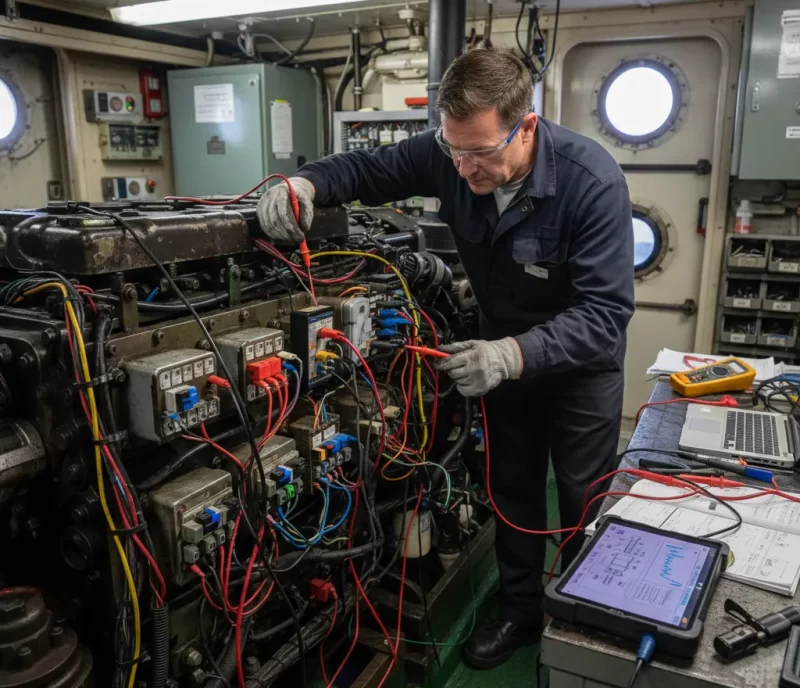
Protect vessel reliability through marine engine electrical diagnostics by Ace Marine Mechanical in Newcastle for precise troubleshooting support.
Marine vessels in 2026 rely on precise electronic communication between sensors and control modules to maintain stable engine output. Comprehensive marine engine electrical diagnostics support early detection of performance disruptions before they develop into costly engine faults. Evolving diagnostic technology continues to enhance reliability across both inboard and outboard systems, allowing services to address issues with greater accuracy and consistency.
Electrical Behaviour in Modern Marine Engines
Electronic subsystems govern fuel delivery, ignition sequencing, airflow measurement, and load adaptation in advanced marine engines. Voltage stability, grounding quality, and real-time sensor input must remain consistent to determine whether a fault originates from an individual component or a deteriorated wiring path.
Control modules store diagnostic fault codes that help narrow down the potential source of an electrical issue. Data logging, freeze frame information, and live parameter charts also capture intermittent irregularities that may not trigger warning indicators but still affect overall performance and reliability.
Common Sensor Failure Mechanisms
Sensor failure is a frequent cause of performance degradation or engine limp mode activation, often triggered by environmental factors or operational stress. Effective marine engine electrical diagnostics often begin with verifying the integrity of these critical input devices.
Typical causes of sensor malfunction include:
• Corrosion Ingress: Saltwater contamination penetrating the sensor housing or connector pins, leading to high resistance or signal loss.
• Physical Damage: Vibrational stress or accidental impact causing a fracture in the ceramic element or magnetic pick-up coil.
• Wiring Harness Abrasion: Insulation wear leading to a short circuit to the engine block or an open circuit condition in the signalling wire.
• Thermal Cycling Fatigue: Repeated exposure to extreme engine heat and cold degrades the internal semiconductor components over time.
• Reference Voltage Issues: A drop or surge in the 5-volt or 12-volt reference signal supplied by the ECM, causing all connected sensors to report inaccurately.
Advanced Marine Engine Electrical Diagnostics for Fault Isolation
Electrical troubleshooting in marine engines involves more than reading fault codes that often point to symptoms rather than the actual cause. Modern testing tools provide clearer visibility of signal behaviour, helping identify issues that basic scanners may overlook.
Several diagnostic methods support accurate fault isolation:
• Voltage Drop Testing: Measures differences in voltage along a circuit to spot resistance from weak connections or corrosion.
• Oscilloscope Signal Tracing: Displays sensor signal patterns to confirm whether frequency and shape match expected engine operation.
• Insulation Resistance Testing: Checks wiring insulation to ensure it has not deteriorated, particularly in systems exposed to moisture and heat.
• Load Testing of Circuits: Applies controlled resistance to confirm that the circuit can handle the required electrical demand without overheating.
• Injector Circuit Analysis: Reviews current patterns in common rail injector circuits to verify that each pulse is delivered correctly by the control module.
For Australian compliance details regarding electrical systems on commercial vessels, check the Australian Maritime Safety Authority’s (AMSA) National Standard for Commercial Vessels (NSCV) Sub-section C5B Electrical.
Reliable Diagnostics for Long-Term Performance
Ace Marine Mechanical delivers precise marine engine electrical diagnostics and dependable repair solutions that restore consistent performance across all vessel types. Our team applies proven fault-finding methods and high-quality workmanship to prevent recurring electrical issues and keep your 2026 engine operating smoothly.
Contact us today for reliable diagnostics and repair support for your vessel.
Related Blog Article: Summer Marine Engine Service: Cooling, Fuel & Electrical Must-Dos in Newcastle
Optimized by: Netwizard SEO